
Starting seeds can feel intimidating at first, but it is truly one of the most rewarding parts of the gardening season. It is always amazing to watch little green seedlings poking their heads through the soil for the first time, slowly coming to life. Over the past several years of gardening here in Canada, I’ve learned a lot about seed starting, from how to choose seeds, to knowing when to plant them and how to care for them well. In today’s post, I’m sharing some of the most helpful things I’ve learned along the way in the hope that it will equip and encourage you to start seeds of your own with greater confidence this growing season.
Seed Selection
The first step to gardening is figuring out what you would like to plant. I find that one of the best times to do this is in mid-January when the days are short and there is still an impossible amount of snow on the ground. It is a little ray of sunshine on those chilly days to know that this winter too shall pass and spring is on its way.
But let’s be honest. It is easy to feel overwhelmed while perusing through seed catalogs. The possibilities are truly endless! That’s why there are a few clarifying questions I try to keep in mind when selecting seeds for the growing season ahead:
What do you already enjoy eating?
This is a simple, yet freeing question. Don’t grow things you don’t look forward to. Now I’m all for trying new things and experimenting, but for the vast majority of seeds you select, grow things that you know you already like to eat.
Where will your seeds grow?
Consider how much space you have to work with in your garden and how much direct sunlight it receives during the day. Plants like pumpkins need a lot of space and a lot of sunlight, while greens can grow in a small container and can thrive in partial shade. Space and sunlight will help you to determine which plants will be a good fit for your garden.
How much time and effort do you want to spend caring for your garden?
Some plants (like leafy greens and root veggies) will require minimal effort and time to maintain, while others (like tomatoes or pumpkins) require a much greater commitment. It’s important to think through how much time and effort you are willing to give to your garden and choose seeds aligned with those goals.
How will you preserve and store your harvest?
Preserving methods like canning take a lot of time and effort, while produce preserved in a cold storage or freezer typically takes much less. Consider how you plan to preserve and store your harvest and select your seeds accordingly.
These three questions are simple and straightforward, but will help you narrow down your seed options significantly.
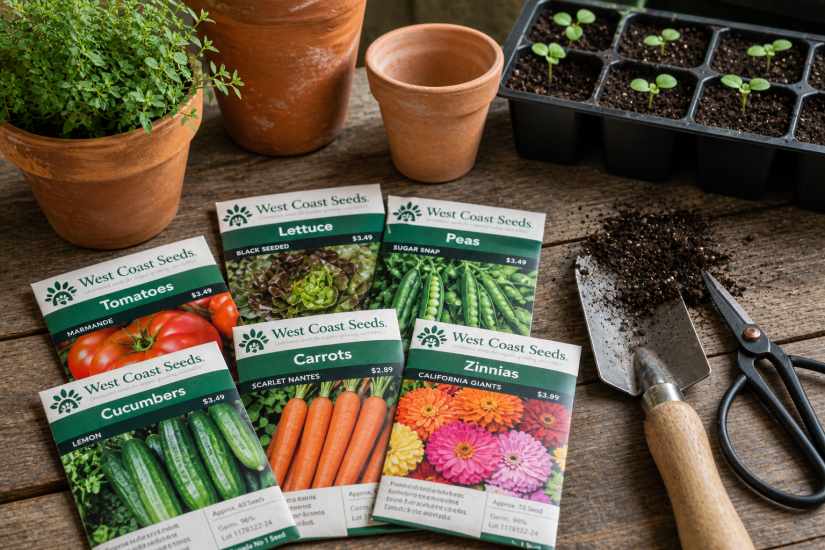
Once I’ve thought through what general types of plants I would like to plant, I then take a look at seed catalogs and choose the particular varieties of each that I would like to grow. I’m not too picky about this, often selecting varieties with a shorter growing season, a higher resistance to common diseases or for their aesthetic qualities. For the last few years, I’ve ordered most of our seeds online through West Coast Seeds, based in Vancouver, British Columbia.
For a look at what we’re planting in the garden this year, check out What We’re Planting: A Peek at Our 2026 Garden Plans.
Timing
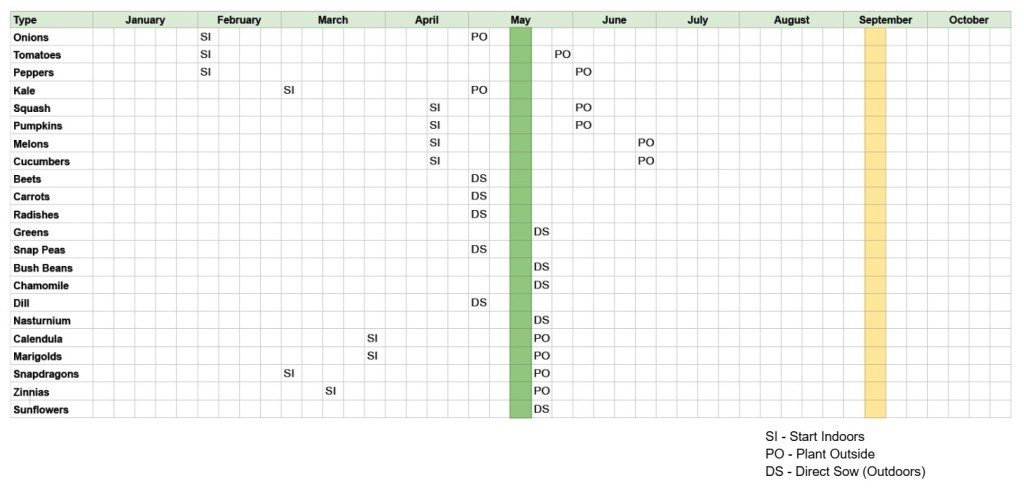
When it comes to seed starting here in Alberta, timing is everything. It’s best to start some seeds indoors in the winter, while others can be started outdoors in the spring. Still others should be started in early summer. Knowing when to plant what is essential for a great growing experience.
The timing for seed starting will generally depend on something called the first and last frost dates. Here in Alberta, our last frost date is typically in mid-May (highlighted in green below) and our first frost date is in mid-September (highlighted in yellow). With that in mind, here is the growing schedule I generally follow:
Seed Starting
There are many excellent resources already out there explaining how to start seeds indoors, so I won’t reinvent the wheel in this post. But a couple resources that have been especially helpful for me in learning how to start seeds indoors are Gardenary’s Complete Guide to Indoor Seed Starting and More Than Gardening’s YouTube video on How to Start & Grow Onions From Seed + Seed Starting Basics for Beginners.
After six years of experimenting with different ways to start seeds indoors here in Canada, here are a few other things we have done that have made the biggest difference in the health and success of our seedlings:
Ditch the Peat Pellets
While peat pellets like these from Jiffy are convenient, I have found that seedlings outgrow them way too quickly. I instead use 4″ plastic seedling pots and fill them with an organic seed starting soil mix. The seedling pots provide plenty of space for the seedlings to grow before they need to be either potted up or transplanted out into the garden.
As a quick aside, I tend not to use biodegradable seedling pots or trays because I use a bottom watering technique (more on this later). I find that the biodegradable pots and trays dissolve too quickly and do not lend themselves well to this watering technique. That being said, I do reuse the plastic seedling pots year after year, washing them in between uses with hot soapy water and letting them soak in a water vinegar mixture to help further sanitize them.
Use Worm Castings
This was the first year I added worm castings to my seed starting soil mix and it has made a significant difference in the health of my seedlings. Seed starting mix is perfect for seedlings when they are young because it is light and fluffy, allowing roots to grow easily. But seed starting soil mixes are generally devoid of most nutrients a plant will need as it gets older. The worm castings give plants a boost by slowly releasing much-needed nutrients into the soil as the plants mature.
Use Grow Lights
After starting seeds on the windowsill for a number of years, I finally gave in last year and got grow lights for our seedlings and I must say, this has also made a huge difference. When starting seeds in February, there simply is not enough natural daylight here in Canada for seedlings (especially tomatoes) to grow without getting leggy. I invested in these grow lights set up on this adjustable storage rack. I then used these smart plugs to automatically turn on the grow lights from 6AM to 10PM daily.
Since making these three changes, I’ve noticed a dramatic improvement in the strength and overall health of our seedlings. While none of them are strictly necessary, each one has helped make seed starting far more successful (and enjoyable).
Caring for Your Seedlings
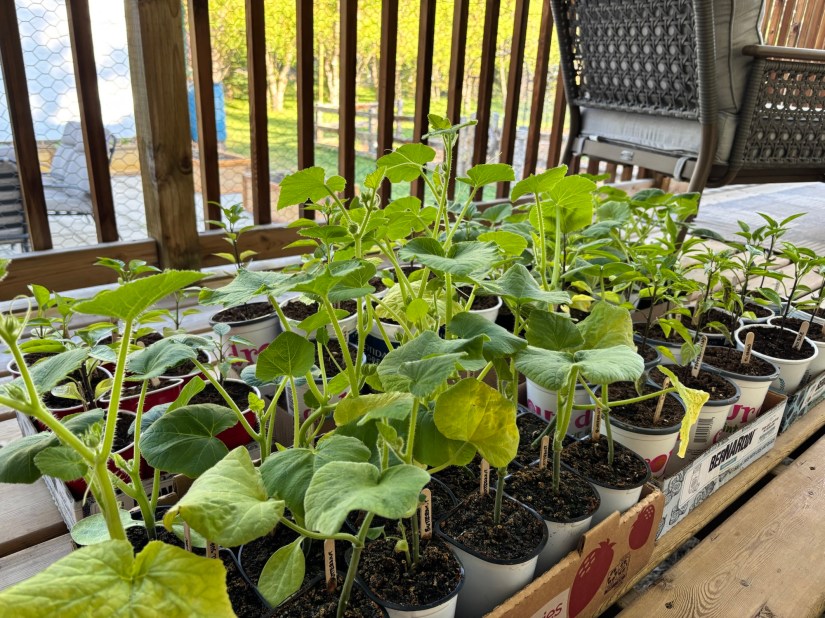
One of the most exciting and miraculous parts of gardening is getting to watch the tiny seed become a full-grown plant. As seedlings mature, there are a few key ways to care for them to ensure they can grow into strong and healthy plants that will produce a bountiful harvest.
Thin Seedlings
The first way to care for your new seedlings is to thin them once they develop their first set of true leaves. Often I will plant more than one seed in each pot, as not all of them will begin to germinate and grow. But these multiple plants will generally need to be thinned down to a single plant, to ensure there is sufficient space and nutrients for it to grow.
Bottom Watering
Another way to care for your indoor seedlings is to bottom water them, rather than using a watering can to water them from the top. First, gentle stick your finger in the soil to see if the first inch of the soil is dry. If so, place the seedling pot in a tub or tray of water, allowing it to soak up the water through the drainage holes on the bottom of the pot until the soil is moistened through. Every few days, use the finger test to see when the soil has dried out again and repeat this process if so.
After seedlings have a few true leaves, they will likely need some additional nutrients to continue growing. This is especially true for tomatoes and peppers. Every few weeks, I mix a liquid fertilizer into the water to provide my seedlings with the added nourishment they need.
Potting Up
The last way to care for your seedlings is to pot them up into larger pots or containers before they become root bound. This is most relevant for tomatoes and peppers, as they are generally in their seedling pots for the longest. Here is a video from More Than Gardening explaining exactly how to do this: How to Pot Up Tomatoes & Other Seedlings – A Step by Step for Beginners. I generally pot my tomatoes and peppers up into 6″ pots with an organic vegetable and herb soil mix, more worm castings and a mix of coffee grounds, egg shells, and banana peels that we have fully dehydrated and finely ground.
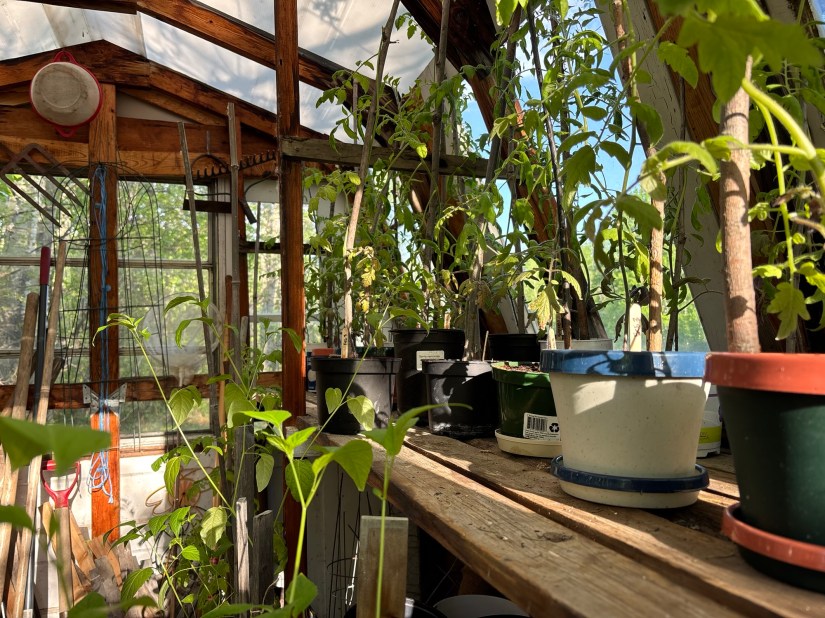
There is something deeply hopeful about seed starting – tending tiny seedlings indoors while trusting that warmer days are ahead. Even after years of gardening, I still find so much joy in watching those first little sprouts emerge each spring. I hope this post has encouraged you and helped make the process feel a little less intimidating.
If you’re starting seeds this year, I’d love to hear what you’re growing or any lessons you’ve learned along the way. Feel free to share in the comments below.
Now that your seedlings are growing strong indoors, you may also enjoy reading The Ultimate Gardening Guide (Part II): Growing in the Great Outdoors, where I share more about hardening off seedlings, planning your garden layout, and caring for plants outdoors throughout the growing season.

You Might Also Enjoy
- The Ultimate Gardening Guide (Part II): Growing in the Great Outdoors
- What We’re Planting: A Peek at Our 2026 Garden Plans
- One-Day Patio Refresh: How a Few Simple Swaps Created a Backyard Oasis
- Savoring the Season: Simple Zucchini Recipes for Every Meal
- Gardens & Grace: Finding Freedom from the Pressure of the “More”
Join The Journey
Subscribe to receive new posts and occasional notes from This Darling Adventure, with stories, ideas, and encouragement for cultivating a beautiful life, one small, intentional step at a time.


1 thought on “The Ultimate Gardening Guide (Part I): Seed Starting & Care”